
D’CORE EDITORIAL · SEPTEMBER 2026
Begin with what buyers see first
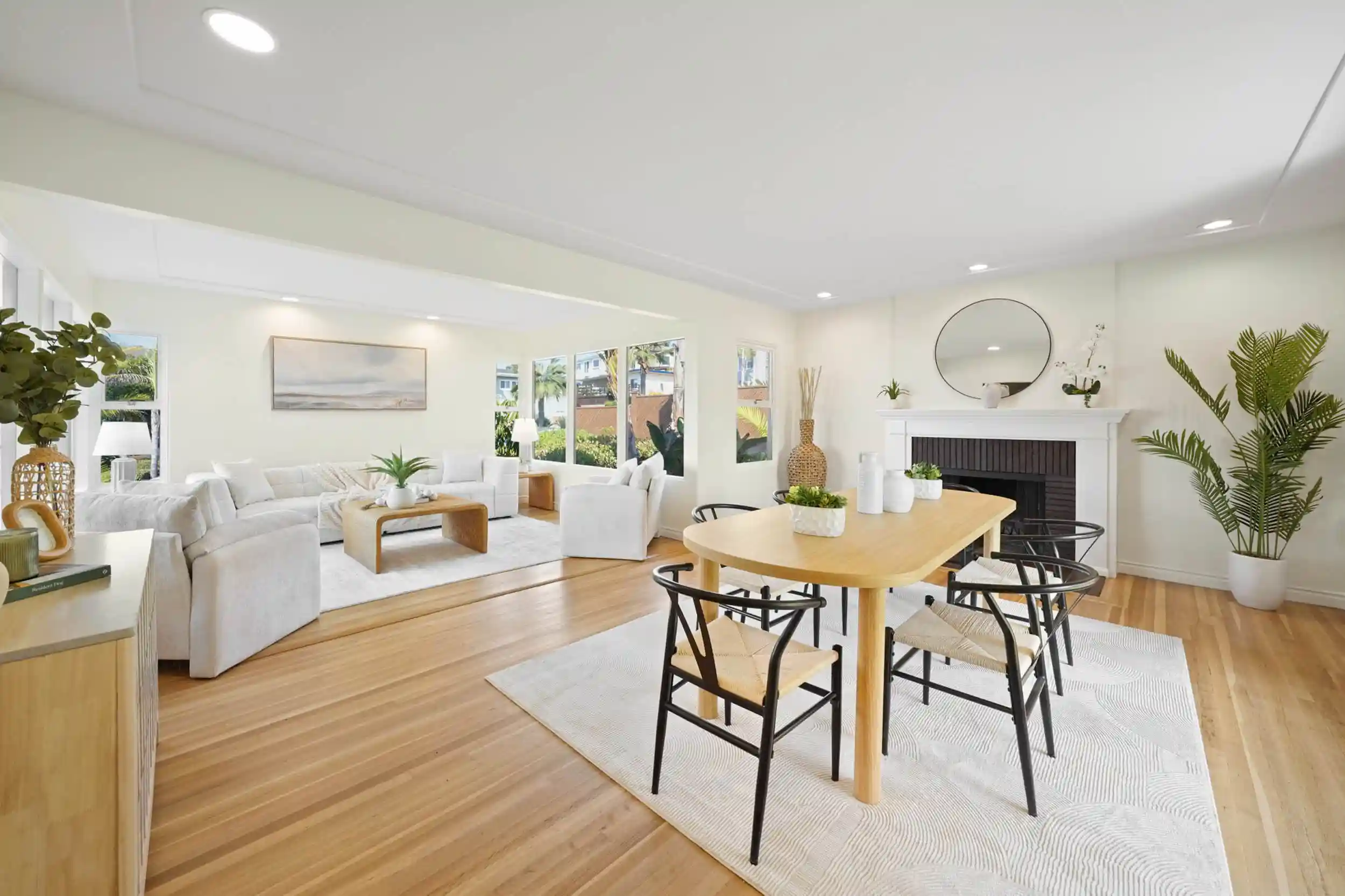
Most buyers meet a property through its photographs. The opening images should communicate a clear purpose, comfortable scale and a reason to keep looking. If the first rooms feel unfinished, crowded or visually disconnected, the listing can be harder to understand.
Make the main spaces read as one home
Living, dining and kitchen areas often appear together in photographs and during the first moments of a showing. Treating them as a connected presentation creates continuity. Competing furniture styles, personal items or unclear room functions can interrupt that experience.
Show scale without filling every corner
Empty rooms do not always explain their proportions, but more furniture is not automatically better. The arrangement should establish function, preserve circulation and give the eye somewhere to rest. A professional stager edits as carefully as they add.
Look beyond the furniture
Condition, cleaning, lighting, landscaping, photography, pricing and the market all affect buyer response. Staging supports the presentation, but it should not be used to disguise repairs or promise a particular sale result. The strongest plan brings the listing team’s decisions into alignment.
Revisit the presentation with fresh eyes
Compare the listing photographs with the experience of entering the property. Are the strongest features immediately clear? Do the rooms feel consistent? Is there visual noise that can be removed? A focused review can reveal small changes with meaningful presentation value.
Choose clarity over shortcuts
When a listing needs a reset, the goal is not simply to add décor. It is to create a more coherent experience for the buyer. A clear scope, appropriate furniture and professional execution make that reset easier to coordinate and easier to trust.
Back to Designer’s Opinion